A UPVC door that will not lock properly can quickly become more than a minor inconvenience. It may leave your home difficult to secure, prevent you from leaving the property unattended or lead to further damage if you repeatedly force the handle or key. In some cases, the door may still appear to lock even though parts of the mechanism are not engaging correctly.
At Tyne Tees Locks, we regularly help homeowners, landlords and businesses deal with faulty UPVC doors across Newcastle. The problem may be caused by a simple alignment issue, a worn cylinder or a failed multipoint locking mechanism. Identifying the cause early can make the repair easier and may prevent the entire locking system from failing.
If your UPVC door feels stiff, the handle will not lift or the key no longer turns smoothly, it is important not to ignore the warning signs. A professional inspection can establish which component is causing the problem and whether it can be adjusted, repaired or replaced.
Why Is My UPVC Door Not Locking?
UPVC doors use several moving parts that must work together correctly. Unlike a basic lock that secures a door at one point, many UPVC doors use a multipoint locking system. When you lift the handle, hooks, rollers or bolts engage at several positions along the frame. Turning the key then secures the mechanism.
If the door drops slightly, the frame moves or one of the internal components becomes worn, the locking points may no longer line up correctly. This can make the handle difficult to lift or stop the key from turning.
The most common causes of a UPVC door not locking include:
- A door that has become misaligned
- Worn or damaged hinges
- A failed multipoint locking mechanism
- A faulty euro cylinder
- Damaged handles or spindles
- Dirt or debris inside the locking points
- Temperature-related expansion or contraction
- A key that is bent, worn or damaged
Although some symptoms may look similar, the appropriate repair depends on the underlying cause. Replacing the cylinder will not solve the issue if the gearbox has failed. Equally, replacing the entire mechanism may be unnecessary if the door only requires adjustment.
Our UPVC lock repair service is designed to identify the actual fault before any parts are replaced.
A Misaligned UPVC Door
Misalignment is one of the most common reasons a UPVC door becomes difficult to lock. Over time, the weight of the door may cause it to drop slightly on its hinges. Changes to the frame or regular use can also affect the position of the door.
When this happens, the hooks, rollers and bolts may no longer line up with the corresponding keeps in the frame. You may notice that the handle lifts normally while the door is open but becomes stiff when the door is closed. This is often a strong indication that alignment is the issue rather than the lock itself.
Other signs of misalignment include:
- The door catching against the frame
- A visible gap around one part of the door
- The need to push or pull the door while turning the key
- Scraping noises when opening or closing it
- The handle only lifting when extra pressure is applied
Continuing to force the handle can place unnecessary pressure on the gearbox and other internal components. What begins as an alignment problem may eventually cause the mechanism to break.
Depending on the condition of the door, we may be able to adjust the hinges or reposition the keeps so that the locking points engage smoothly again. The aim is to restore normal operation without replacing working parts unnecessarily.
Problems With the Multipoint Locking Mechanism
The multipoint locking mechanism runs along the edge of a UPVC door. It is responsible for moving the hooks, rollers and bolts when the handle is lifted.
The central gearbox is one of the most important parts of this system. If the gearbox fails, the handle may become loose, remain stuck or move without operating the locking points. The key may also turn without securing the door.
Common signs of a failed mechanism include:
- The handle suddenly dropping
- The handle moving without resistance
- The hooks or bolts failing to move
- The key turning but not locking the door
- The door becoming stuck in the locked position
- Grinding or clicking noises from inside the lock
A failed mechanism does not always mean that the whole door needs replacing. In many cases, the relevant gearbox or locking strip can be removed and replaced while the existing door remains in place.
We can inspect the mechanism, identify compatible components and complete the required UPVC lock repair. Where an exact replacement is unavailable, we can assess whether another suitable system can be fitted.
A Faulty Euro Cylinder
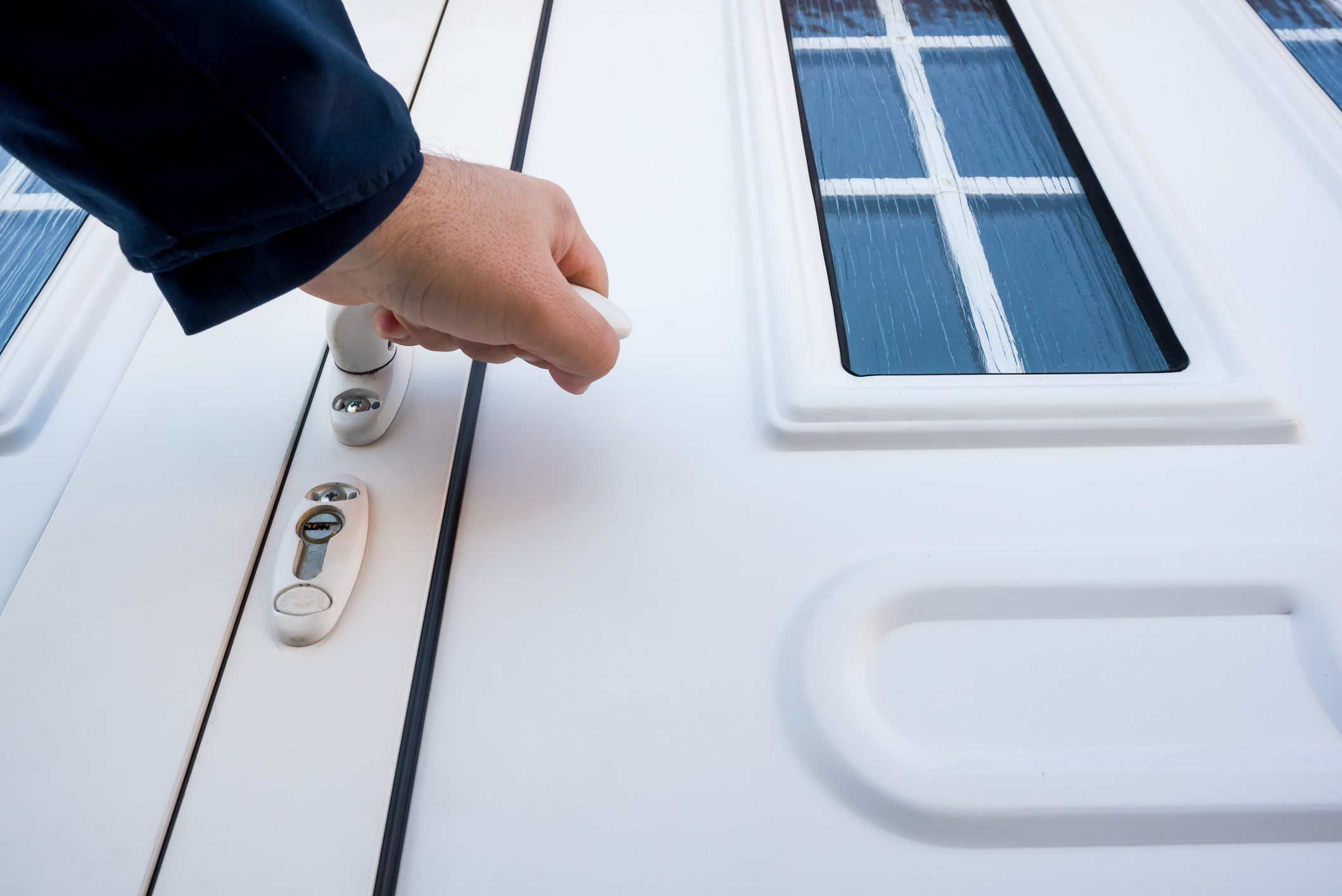
The euro cylinder is the part of the lock into which you insert the key. It is separate from the multipoint mechanism, although both components work together when the door is locked.
A cylinder may become difficult to use because of wear, internal damage or an issue with the key. The key may feel stiff, become stuck or refuse to turn. In some cases, part of a key may snap inside the cylinder.
You may have a cylinder problem if the door handle lifts correctly but the key will not complete the locking action. However, it is important to check the rest of the mechanism before assuming that the cylinder is responsible.
A damaged cylinder can usually be replaced without changing the entire multipoint system. This may also provide an opportunity to consider a more secure replacement, particularly if the existing cylinder is old or does not offer suitable protection against common attack methods.
We assess the door, the current lock and the level of security required before recommending a replacement. The most expensive option is not automatically the right one. Our priority is to fit a suitable cylinder that works correctly with the rest of the door.
Damaged UPVC Door Handles
The handles on a UPVC door operate the internal mechanism through a spindle. Daily use can gradually wear the handles, springs or spindle.
A loose or drooping handle does not always mean that the complete lock has failed. The problem may be limited to the handle set or the spring cassette. However, a handle that becomes difficult to lift can also indicate resistance elsewhere in the mechanism.
Warning signs include:
- A loose handle
- A handle that does not return to its normal position
- Visible cracks around the handle
- A spindle that no longer operates the mechanism
- A handle that feels unusually stiff
- Screws that repeatedly become loose
Trying to solve a stiff handle by tightening every visible screw may not address the actual issue. If the door is misaligned or the internal mechanism is failing, the handle will remain under pressure.
We inspect the complete locking action rather than treating the handle as an isolated component. This helps us determine whether the handle needs replacing or whether another repair is required.
Can Cold or Hot Weather Affect a UPVC Door?
Changes in temperature can affect the way a UPVC door sits within its frame. Materials can expand in warmer weather and contract when temperatures fall. These changes are usually small but may be enough to affect a door that is already close to becoming misaligned.
During colder periods, seals may also become firmer and existing mechanical problems may become more noticeable. In hot weather, expansion can cause the door to rub or make the locking points more difficult to engage.
If a door only becomes difficult to lock during certain weather conditions, it may still require adjustment. A correctly aligned door should continue to operate smoothly throughout normal seasonal changes.
Temporary force is not a reliable solution. Pulling the handle harder or pushing the door against the frame can place additional strain on the lock. An adjustment can often resolve the underlying issue and reduce the likelihood of further damage.
What Should I Do if My UPVC Door Will Not Lock?
If your door suddenly stops locking, begin by checking whether anything is visibly obstructing the frame. Look for dirt, loose objects or damaged seals around the keeps. You can also test the handle carefully while the door is open.
If the mechanism works when the door is open but not when it is closed, misalignment is likely. If it does not work in either position, the mechanism, handle or cylinder may be faulty.
Avoid repeatedly forcing the key or handle. Excessive pressure can snap the key, damage the gearbox or leave the door stuck in the locked position.
You should also avoid dismantling the mechanism unless you have the right knowledge and tools. UPVC locking systems contain several interconnected components. Removing the wrong screws or moving the mechanism while it is under pressure can make the problem more difficult to correct.
If the door cannot be secured, arrange professional assistance as soon as possible. Do not leave an accessible entrance unlocked, particularly overnight or when the property is empty.
Can a UPVC Door Lock Be Repaired Without Replacing the Door?
In many cases, yes. A locking problem rarely means that the complete UPVC door must be replaced.
The appropriate solution may involve:
- Realigning the door
- Adjusting the hinges
- Repositioning the keeps
- Replacing a damaged handle
- Installing a new euro cylinder
- Repairing or replacing the gearbox
- Replacing the multipoint locking strip
- Removing a broken key
- Restoring access to a jammed door
We aim to preserve the existing door wherever it remains practical and secure to do so. A targeted UPVC lock repair can often restore normal operation at a lower cost than replacing the complete door.
However, we will also be honest if the door, frame or mechanism has deteriorated to the point where repeated repairs are unlikely to provide a reliable result. Our advice is based on the condition of the door, the availability of compatible parts and the security of the finished repair.
Why Professional Diagnosis Matters
UPVC locking problems can be misleading. A stiff key may appear to indicate a cylinder fault when the real issue is pressure caused by poor alignment. A drooping handle may look like a simple handle problem when the gearbox is beginning to fail.
Replacing parts without identifying the source of the fault can waste money and allow the original problem to continue. For example, fitting a new gearbox without correcting a dropped door may place the new mechanism under the same strain that damaged the old one.
We check how the door sits in the frame, how the handle moves, whether each locking point engages and how the key operates the cylinder. This gives us a clearer understanding of the complete system.
Once we have identified the issue, we can explain the available options. This may be an adjustment, a focused repair or the replacement of a specific component.
How Can I Reduce the Risk of Future Lock Problems?
You cannot prevent every mechanical fault but sensible use and regular attention can help a UPVC door operate reliably for longer.
Do not force a handle that becomes stiff. A change in resistance is often an early warning that the door needs adjustment. Addressing it promptly may protect the gearbox from further strain.
Keep the frame and locking points free from dirt. Grit and debris can interfere with the way hooks and rollers enter the keeps. Check the edge of the door occasionally for visible damage or loose components.
Avoid hanging heavy items from the handle. This can place additional pressure on the handle springs and spindle.
Pay attention to changes in the way the door closes. If it begins to scrape, catch or require additional pressure, arrange an inspection before the locking mechanism becomes damaged.
It is also worth reviewing the security of older cylinders. A functioning lock is not necessarily the most suitable lock for the property. We can advise whether the current components remain appropriate and explain the available upgrade options.
UPVC Door Repairs for Landlords and Businesses
A faulty UPVC door can be particularly disruptive in a rented property or commercial building. Tenants may be unable to secure the premises while staff, customers or deliveries may be affected by a door that cannot be opened reliably.
We work with residential and commercial customers across Newcastle, including homeowners, landlords, letting agents and local businesses. Our approach is to identify the fault clearly and provide a practical repair that considers security, access and ongoing use.
Where several people rely on the same entrance, early action is particularly important. Repeated use of a failing lock can accelerate the damage and increase the risk of the door becoming completely jammed.
Keeping accurate records of repairs and replacement parts can also help landlords and building managers plan future maintenance. If the same door repeatedly develops faults, there may be an underlying alignment or frame issue that needs more detailed attention.
When Should I Call a Locksmith?
You should contact a locksmith if:
- The door will not lock or unlock
- The handle cannot be lifted
- The key is stuck or has snapped
- The door only locks when pushed or pulled
- The handle has become loose or dropped
- The mechanism makes grinding noises
- The hooks or bolts do not move
- The door has become stuck shut
- You are concerned about the security of the cylinder
- A previous repair has not resolved the fault
It is usually better to arrange help when the first symptoms appear rather than wait for complete failure. A door that is still operational is often easier to inspect and repair than one that has become jammed.
Arrange a UPVC Door Lock Repair in Newcastle
A UPVC door that does not lock properly should be treated as both a mechanical issue and a security concern. The fault may be caused by alignment, hinges, handles, the cylinder or the multipoint mechanism. The correct repair begins with finding the cause rather than replacing parts at random.
At Tyne Tees Locks, we provide practical support for UPVC doors and windows throughout Newcastle. We work carefully to minimise unnecessary damage, restore secure access and help customers understand the repair options available.
Whether the handle has become stiff, the key will no longer turn or the door is completely stuck, we can assess the locking system and recommend a suitable solution. To discuss the problem or arrange assistance, please get in touch with our team.